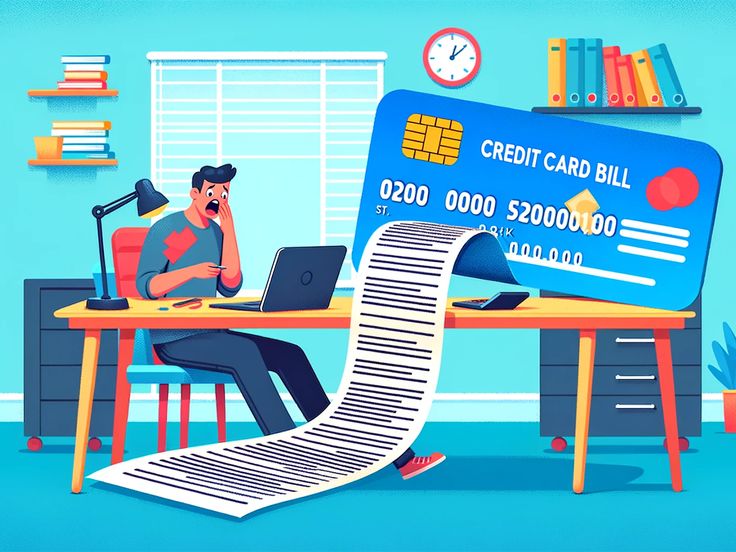
Credit card minimum payments are designed to feel harmless. They look small, manageable, and reassuring, especially during months when money feels tight. Paying the minimum creates the impression that you are being responsible, that you are keeping your finances under control. In reality, minimum payments are one of the most effective ways the credit system keeps people trapped in long-term financial stagnation.
The danger of minimum payments is not obvious at first. There is no immediate penalty for choosing them. Your account stays in good standing, your credit score avoids damage, and the bank thanks you for paying on time. But beneath that surface calm, interest is quietly compounding, stretching your debt across years or even decades, and redirecting your hard-earned income away from progress and into profit for lenders.
To understand why minimum payments are so damaging, you have to understand how they are calculated. Credit card companies do not set minimum payments to help you get out of debt quickly. They set them to keep you paying for as long as possible without defaulting. The minimum is often just enough to cover interest and a tiny fraction of the principal. This means that month after month, your balance barely moves, even though money is leaving your bank account.
What makes this especially harmful is the psychology involved. Humans are wired to seek short-term relief. When you see a low minimum payment, your brain registers safety. You feel less urgency, less stress, and less motivation to change spending habits. Over time, this emotional comfort becomes expensive. The longer you stay in the minimum-payment cycle, the more interest accumulates, and the harder it becomes to break free.
Interest is where the real damage happens. Credit cards typically carry some of the highest interest rates in consumer finance. When you make only the minimum payment, interest consumes most of that payment before it ever touches your actual debt. This creates a situation where you are paying consistently but not meaningfully reducing what you owe. Years can pass with little to show for it, except statements proving that you have paid thousands of dollars without escaping the balance.
Minimum payments also distort your sense of affordability. When a purchase only adds a small amount to your minimum due, it feels insignificant. This illusion encourages repeated spending, even when your financial situation cannot truly support it. Over time, small charges accumulate into large balances, and those balances turn into long-term obligations that drain your income month after month.
Another overlooked effect of minimum payments is opportunity cost. Money spent on interest is money that cannot be used to build wealth. It cannot go into savings, investments, education, or emergency funds. Even modest monthly interest payments, when stretched over years, represent lost opportunities that compound just as powerfully as debt itself. The tragedy is that many people never calculate what those payments could have become if they had been invested instead.
Minimum payments also delay financial milestones. Goals like buying a home, starting a business, or achieving financial independence become harder when a portion of your income is permanently allocated to servicing old debt. Even if your income increases, the habit of paying the minimum often follows, keeping your financial progress slower than it needs to be. This is why people can earn more money over time yet still feel stuck.
The system works because it relies on patience rather than pressure. Unlike payday loans or missed bills, minimum payments do not create immediate pain. They create long-term dependency. By the time borrowers realize how much interest they have paid, the damage has already been done. This delayed realization is one of the most effective features of the credit card business model.
Breaking free from the minimum-payment trap requires a shift in perspective. Instead of viewing the minimum as a recommendation, it should be seen as a warning. It represents the slowest possible path out of debt. Paying more than the minimum, even modestly more, changes the math dramatically. Extra payments go directly toward principal, shortening repayment time and reducing total interest in ways that feel almost disproportionate to the effort involved.
Awareness is the first and most powerful step. When you understand that minimum payments are not designed for your benefit, you stop treating them as a safe default. You begin to see interest as an active drain rather than a passive fee. This awareness often leads to better decisions, not just with credit cards, but with all forms of borrowing.
Credit cards themselves are not inherently bad. They can be useful tools when managed intentionally. The problem begins when minimum payments become a long-term strategy rather than a temporary fallback. What feels like flexibility today often becomes limitation tomorrow, quietly shaping your financial life without your consent.
In the end, minimum payments keep people poor not because they are illegal or unethical, but because they are subtle. They exploit comfort, habit, and a lack of visibility into long-term costs. Once you see how they work, it becomes clear that the real risk is not missing a payment, but believing that the minimum is enough.
Financial freedom rarely comes from dramatic changes. It comes from understanding small decisions and correcting them early. Escaping the minimum-payment mindset is one of those corrections. The sooner it happens, the faster money stops working against you and starts working for your future instead.