mArtificial Intelligence has moved from theoretical discussions into practical, everyday applications that shape the world in profound ways. What was once seen as a distant technological dream has become one of the strongest driving forces behind modern innovation. Today, AI stands at the center of global transformation, influencing industries, reshaping workflows, and redefining what businesses and societies can achieve. Understanding this shift is essential for recognizing how deeply AI is woven into the future of work, creativity, problem-solving, and human progress.
At its core, AI is about creating systems that can learn, adapt, and make decisions with minimal human input. These systems analyze vast amounts of data, identify patterns, and deliver insights faster than traditional methods ever could. This ability to process information with speed and accuracy is what makes AI so transformative. It does not simply automate tasks; it enhances them in ways that elevate efficiency, reduce errors, and open new pathways for growth. As organizations adopt AI-driven strategies, industries are undergoing the most significant evolution since the rise of the internet.
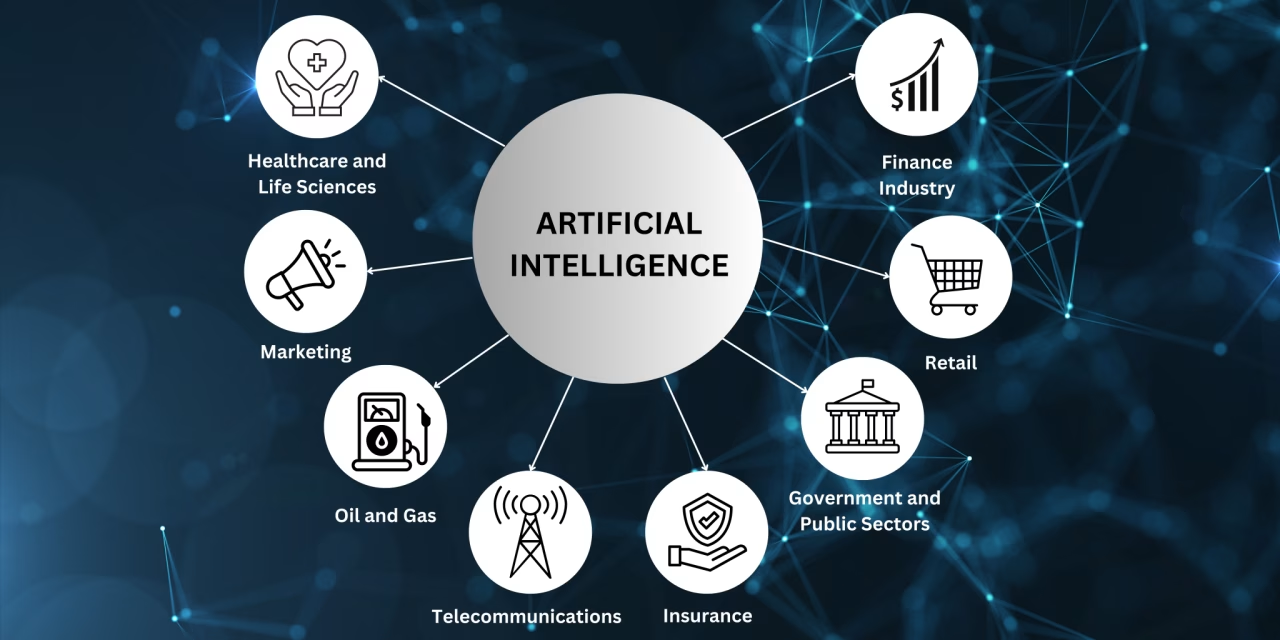
One of the most visible transformations is happening in healthcare. AI supports doctors by analyzing medical images, predicting diseases, and personalizing treatment plans. Tools powered by machine learning can detect conditions like cancer or heart disease earlier than conventional diagnostics, giving patients a better chance at recovery. Wearable devices that monitor vital signs also play a role, offering real-time data that helps patients and doctors make informed decisions. The result is a shift toward preventive care, where AI enables faster detection and improved outcomes, ultimately changing the entire landscape of medical practice.
In the financial sector, AI has become a backbone for risk assessment, cybersecurity, and customer service. Banks use algorithms to identify fraudulent transactions within seconds, protecting both institutions and customers. Financial advisors rely on AI tools to evaluate market conditions, optimize portfolios, and reduce risk exposure. Even simple interactions like chatting with customer support are influenced by AI systems that can instantly resolve common issues. The industry increasingly depends on intelligent systems to maintain accuracy, speed, and trust in a fast-paced economic environment.
Manufacturing has also entered a new era with the rise of AI-driven automation. Factories equipped with smart robots can adapt to different tasks, monitor production quality, and predict when machinery needs maintenance. This predictive capability prevents costly breakdowns and boosts overall productivity. The combination of robotics and AI not only accelerates production but also improves safety by reducing the need for human workers in hazardous environments. As a result, modern manufacturing is becoming more efficient, precise, and responsive to global demands.
Transportation is another industry undergoing radical transformation. The development of self-driving vehicles represents one of the clearest examples of AI’s potential. Autonomous systems analyze road conditions, traffic patterns, and real-time sensor data to make complex decisions that enhance safety and reduce human error. Logistics companies use AI to plan delivery routes, reducing fuel consumption and ensuring faster service. Even public transportation systems are adopting smart technologies to improve scheduling, reduce congestion, and offer better passenger experiences. The result is a future where travel becomes safer, smoother, and more efficient than ever before.
Retail has embraced AI to understand consumer behavior with remarkable precision. Online stores use algorithms to recommend products tailored to each shopper’s preferences, increasing satisfaction and sales. Inventory management systems powered by AI track supply levels in real time, reducing waste and ensuring that stores remain well-stocked. Some retailers implement cashier-less shopping, where AI systems automatically track purchases and complete payments without requiring customers to wait in line. These advancements create a seamless shopping experience that blends digital intelligence with human convenience.
In the world of entertainment and media, AI influences everything from content creation to personalized recommendations. Streaming platforms analyze viewing habits to deliver suggestions that match individual tastes. AI tools assist filmmakers and designers by generating visual effects, editing scenes, or even composing music. In journalism, systems help analyze large sets of information to support investigative reporting. The relationship between creativity and AI continues to grow, with artists using intelligent tools to bring innovative ideas to life in ways that were previously impossible.
Education is experiencing profound change as AI reshapes how students learn and how teachers deliver lessons. Intelligent tutoring systems adapt to each student’s pace, offering personalized explanations and exercises. These platforms identify where a learner struggles and provide targeted support that improves comprehension. Educators use data-driven analytics to track progress and adjust teaching strategies. With AI-enhanced learning environments, education becomes more inclusive, accessible, and effective, empowering students to grow at their own rhythm.
In agriculture, AI helps farmers optimize crop yields, monitor soil conditions, and detect pests before they spread. Smart sensors and drones capture data that guides farmers in making decisions about irrigation, fertilization, and harvesting. These tools reduce resource waste and increase production efficiency, supporting sustainable farming practices. As global food demand rises, AI’s role in agriculture becomes essential for building resilient and environmentally friendly systems.
Even the energy sector benefits from AI’s analytical power. Smart grids use predictive algorithms to balance supply and demand, reduce waste, and prevent outages. Renewable energy systems rely on AI to forecast weather patterns and optimize energy generation from solar or wind sources. These advancements improve reliability and support the transition to cleaner energy solutions, highlighting AI’s potential to contribute to global sustainability goals.
Across industries, one theme remains consistent: AI does not merely replace traditional processes—it elevates them. It creates opportunities for innovation, enhances decision-making, and strengthens the capabilities of human workers. Instead of diminishing the role of people, AI often removes repetitive burdens, allowing individuals to focus on creativity, strategy, and complex problem-solving. The collaboration between humans and intelligent systems forms the foundation of the next industrial evolution.
As the world continues to embrace AI, it is important to approach these advancements with responsibility and awareness. Ethical considerations, data privacy, and transparency must remain central to the development of intelligent systems. When guided by thoughtful implementation and strong principles, AI becomes a force that empowers industries and enriches society.
Artificial Intelligence is no longer a futuristic concept but a defining element of modern progress. Its impact reaches every corner of the economy, reshaping how industries operate and how people interact with technology. Understanding this transformation offers insight into a future where intelligent systems support sustainable growth, unlock innovation, and create new possibilities across the world. The journey of AI is still unfolding, but its influence is already clear: it is transforming industries, elevating human potential, and shaping the world of tomorrow.